
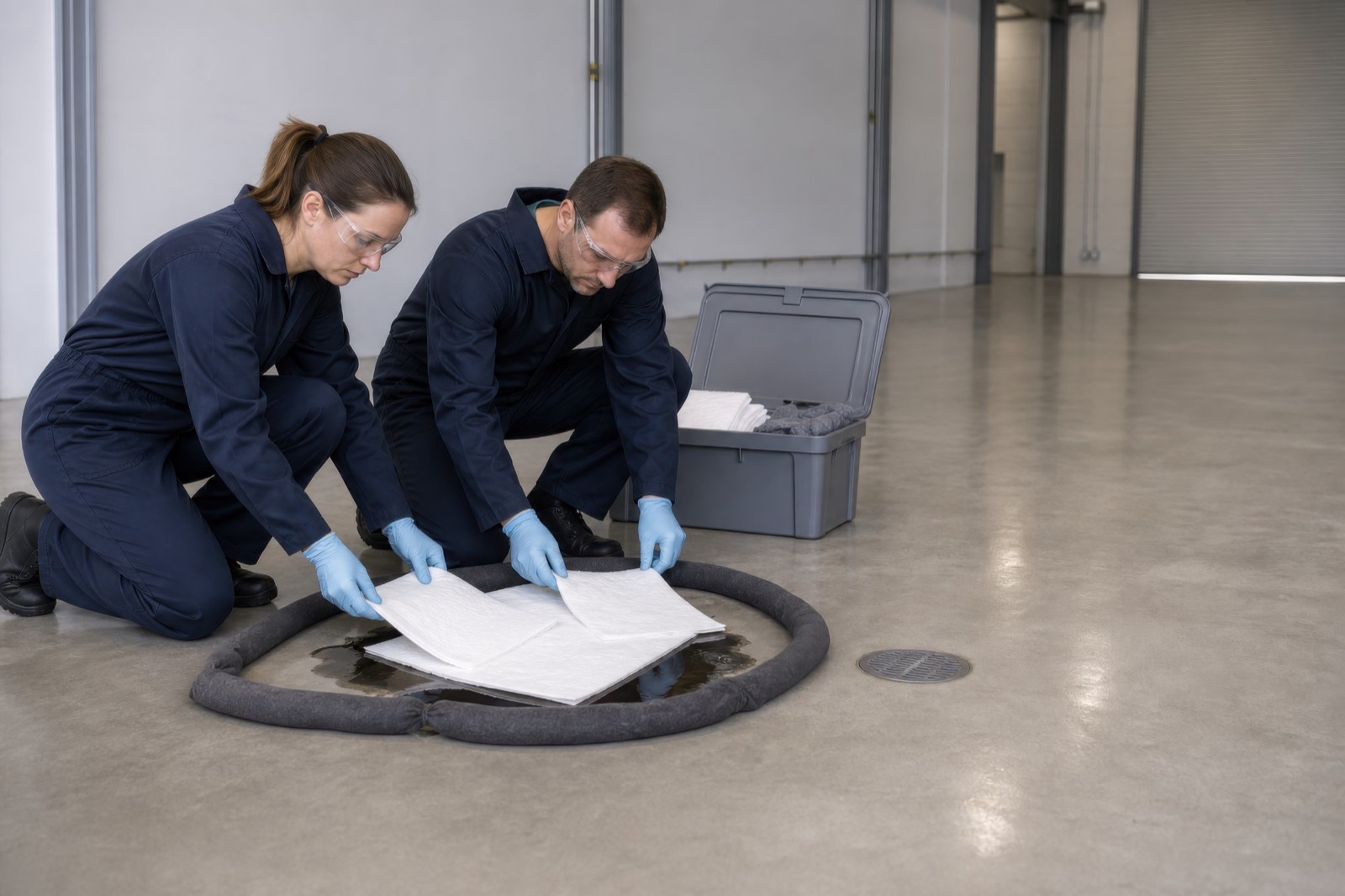
When oil or fuel reaches water, or a leak heads for a storm drain, every minute counts. Spill booms are the first line of defence. They stop a spill from spreading so it can be absorbed and recovered. Here's how they work, where they're used, and why more Canadian municipalities and industrial buyers are choosing sustainable spill booms.
What Is a Spill Boom?
A spill boom is a long, floating barrier used to contain or absorb liquid spills. There are two main types:
- Absorbent booms are filled with polypropylene sorbent that soaks up oil and fuel while repelling water. They're the go-to choice for oil spills on water and for cleaning up sheens.
- Containment booms don't absorb anything. They form a physical barrier, usually with a weighted skirt below the waterline, to hold a spill in one place until it can be recovered.
How Spill Booms Are Used
Spill booms are part of the spill response plan at:
- Marinas, harbours and shorelines, to surround fuel spills and oil sheens
- Storm drains, ditches and outfalls, to stop contaminated runoff before it reaches waterways
- Industrial sites and loading docks, to ring leaking equipment, tanks and drums
- Municipal fleets and public works yards, for roadside incidents and yard spills
They're also placed around fuelling areas ahead of time, so a small leak never becomes a reportable spill.
Booms work best alongside other spill control products. The boom contains the spill, then absorbent socks, pads and pillows soak up what's inside. A well-stocked spill kit puts all of it within reach.
Why Choose Sustainable Spill Booms?
Most absorbent booms are made from virgin polypropylene, a plastic made from petroleum. After use, they're usually landfilled or incinerated. That's an odd outcome for a product meant to protect the environment.
Sustainable spill booms change the start of that lifecycle. Green Spill Kits oil spill containment booms are made from 100% recovered polypropylene, giving waste plastic a second life while doing the job spill response demands.
The benefits go beyond the material:
- Less new plastic. Recovered content reduces demand for virgin, petroleum-based polypropylene.
- Procurement points. Recycled, Canadian-made spill control products support Buy Canadian, Buy Ontario and ESG purchasing criteria.
- Ready for EPR. As Extended Producer Responsibility rules expand across Canada, recovered-content products help you get ahead.
Choosing the Right Spill Boom
Before you order, consider:
- What's spilling: oil-only booms for hydrocarbons on water, universal booms for mixed liquids on land
- Where you'll use it: open water, drains or hard surfaces
- Length and diameter: enough to fully surround your largest likely spill
- Speed: booms stored in a spill kit near the risk area deploy fastest